Principles and Platform

Section Overview

This section covers three main areas:

  • Principles and Platform - Architectural principles and the Enactor platform stack
  • Cloud and Central Components - Estate Manager and Commerce microservices
  • POS and Edge - Deployment models and store topologies

Architectural Principles

  • Platform, OS, and Database Agnostic
  • Hardware Independent
  • Ability to support all Mobile, Fixed, and HHT devices from the same code-base
  • Fully support any size of Store Estates
  • Support the full range of Online and Offline scenarios
  • Allow the Database, Back Office, and Mobile Server to be centralised OR distributed
  • Global, central configuration of all Stores and Devices regardless of the chosen Architecture
  • API First Architecture

Enactor Platform

Enactor Platform

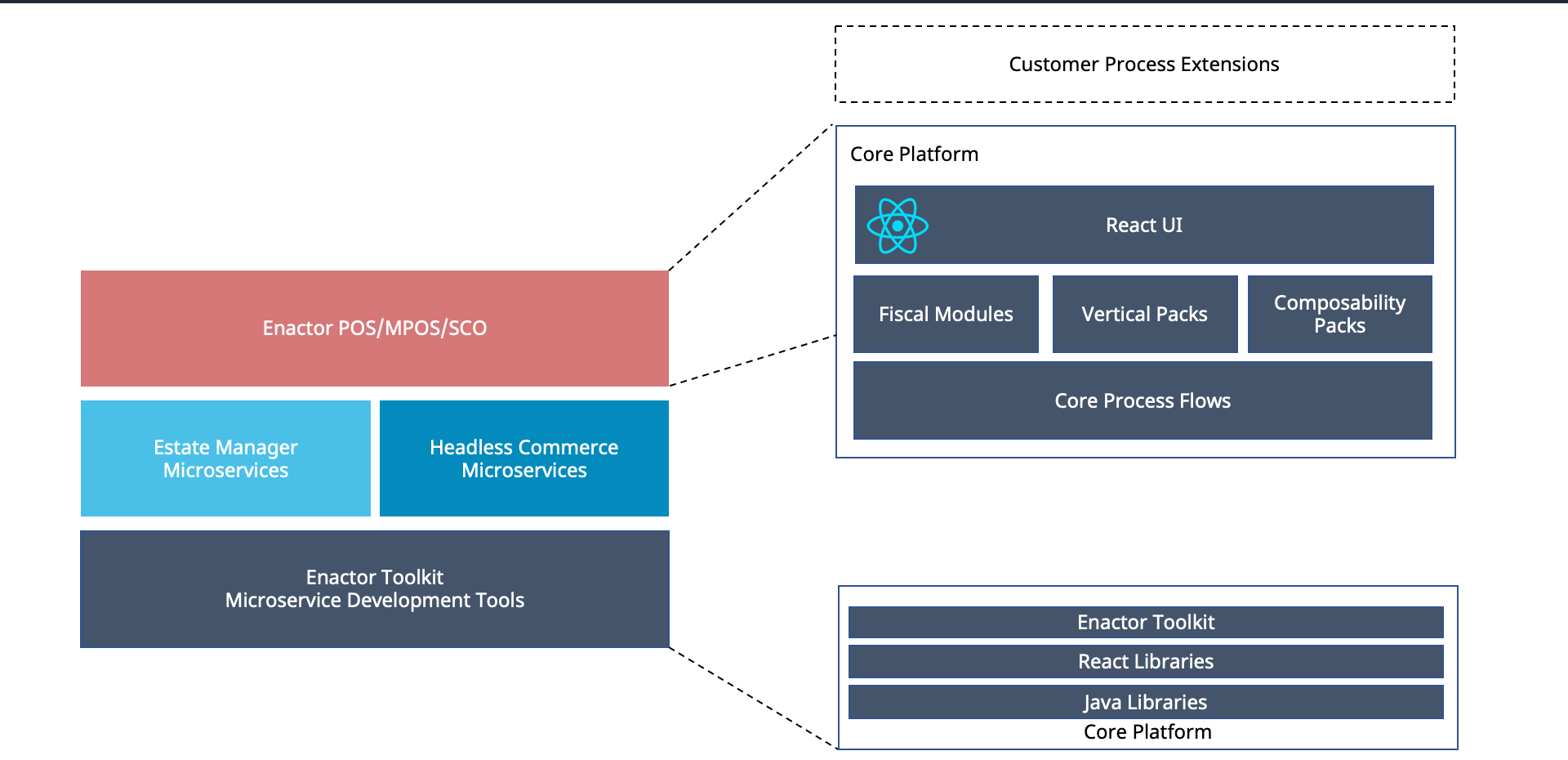
The Enactor platform is a layered architecture:

  • Customer Process Extensions - Customer-specific customisations built on top of the core platform
  • Core Platform - React UI, Fiscal Modules, Vertical Packs, Composability Packs, and Core Process Flows
  • Applications - Enactor POS / MPOS / SCO, Estate Manager Microservices, Headless Commerce Microservices
  • Enactor Toolkit - Microservice Development Tools
  • Foundation - React Libraries, Java Libraries, Core Platform

Unified Front-end

Unified Front-end

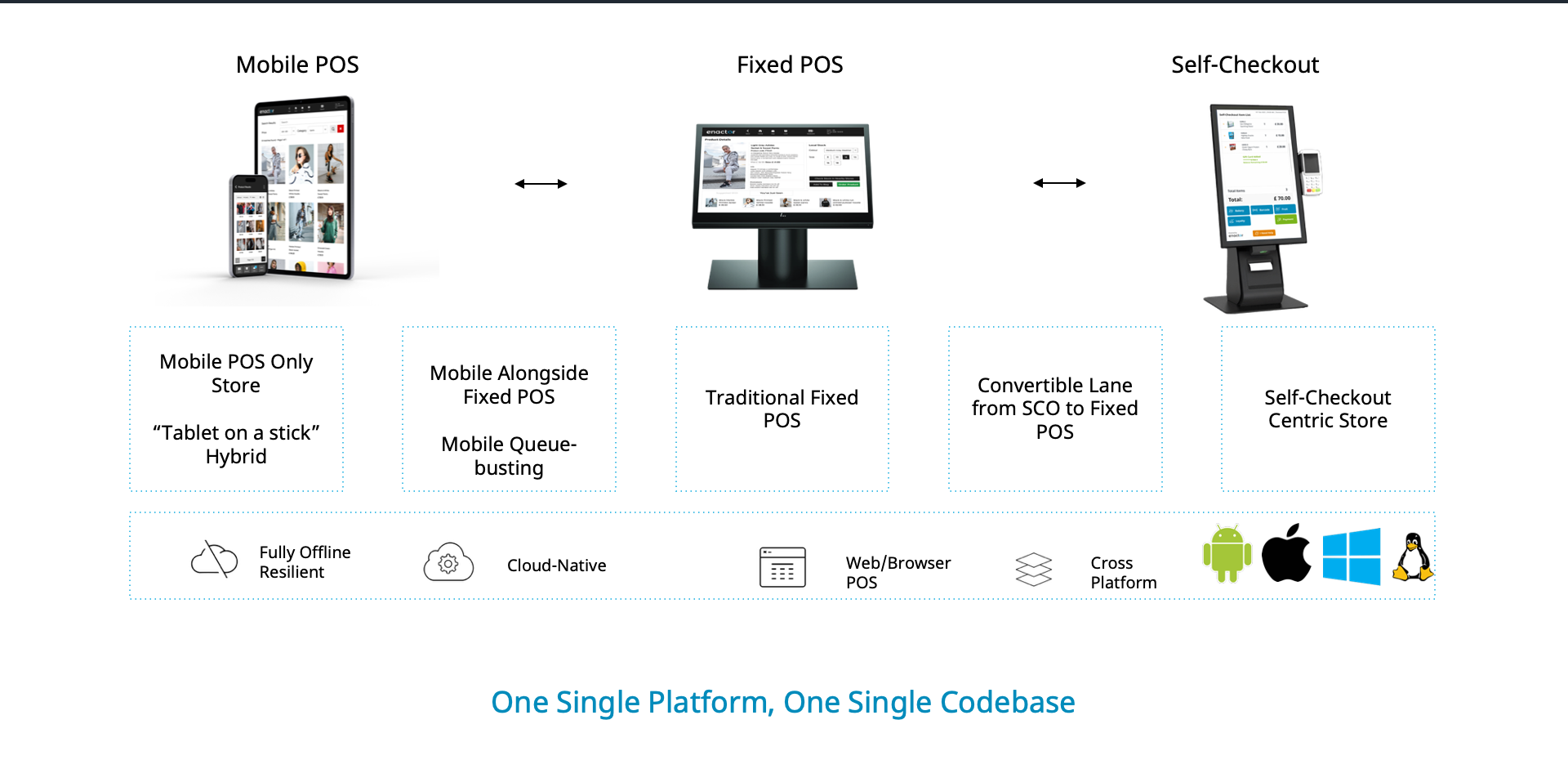
One Single Platform, One Single Codebase supporting all device types:

ScenarioDescription
Mobile POS Only Store"Tablet on a stick" Hybrid
Mobile Alongside Fixed POSMobile Queue-busting
Traditional Fixed POSStandard fixed terminal deployment
Convertible LaneFrom SCO to Fixed POS
Self-Checkout Centric StoreSCO-first store layout

Key capabilities: Fully Offline Resilient | Cloud-Native | Web/Browser POS | Cross Platform (Android, iOS, Windows, Linux)


Further Reading

DocumentDescription
Navigating Estate ManagerNavigating the Enactor Estate Manager web application
Configuring A New StoreSetting up a new store in Estate Manager